Reflective vs Transflective Displays. Choosing The Best Solution For Your Project.
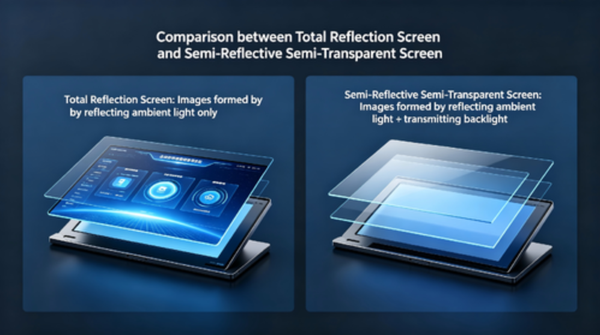
1. Full Reflective Screen
No built-in backlight, with a full reflective layer at the back. It works entirely via ambient light reflected to form images.
Pros: Ultra-low power, clear under strong sunlight, no heat.
Cons: Unreadable in dark places, mostly monochrome, narrow viewing angles.
Applications: Calculators, electricity meters, solar IoT sensors.
2. Transflective (Semi-transflective) Screen
Equipped with backlight and a semi-transparent semi-reflective layer. Two working modes:
Reflective mode (outdoor): Turn off backlight and use ambient light.
Transmissive mode (dark rooms): Turn on backlight to light up the screen.
Pros: Visible day and night, supports full color, balanced power consumption.
Cons: Higher cost and power than reflective screens, weaker contrast.
Applications: Industrial handheld devices, vehicle dashboards, outdoor POS machines.
THVD Vision
has a wide range of products, including high-brightness display, bar type display, small and medium-sized LCD display, transparent display, commercial display units and other up to 98" products. THVD is flexible in operation and can meet the various needs of customers and expand its market share. THVD has been rooted in the Shenzhen LCD screen industry for 9 years and has a wealth of supplier and customer resources to ensure long-term stable and sustainable development.

